Picture this: You’ve built your small business from the ground up. The late nights, the hard decisions, the passion all coming together to create something truly special. But wait, what happens when the unexpected strikes? That’s where small business insurance steps in to be your safety net!
In this guide, we’ll dive deep into the world of small business insurance, uncovering the must-have policies that will protect your business from financial turmoil. Whether you’re just getting started or looking to bolster your current setup, understanding these insurance essentials is key to safeguarding your entrepreneurial dream.
Understanding Small Business Insurance

Did you know that 40% of small businesses have no insurance? That’s a huge risk to take. Understanding small business insurance is crucial to protect your investment and keep your business afloat.
Small business insurance is like a safety net for your company. It covers a wide range of potential risks that could otherwise devastate your business. From liability claims to property damage, having the right coverage can be the difference between staying above water and financial ruin.
Types of Insurance Coverage for Small Businesses
There are several types of insurance policies that small businesses typically need. General Liability Insurance protects against claims of bodily injury or property damage. Professional Liability Insurance, often called errors and omissions insurance, covers you if a client claims you made a mistake in the services you provided.
- Commercial Property Insurance: Covers damage to your business property from events like fire or theft.
- Workers’ Compensation Insurance: Protects your employees if they get injured or sick at work.
- Business Interruption Insurance: Helps cover lost income if your business is forced to close temporarily due to a covered event.
Potential Risks Covered by Small Business Insurance
Small business insurance is designed to shield you from a multitude of risks. Natural disasters, lawsuits, and even employee injuries can be financially crippling. Insurance helps manage these risks by covering the associated costs.
Here is the deal: without adequate coverage, a single lawsuit or disaster could wipe out your business savings. Don’t wait until it’s too late. Assess your risks and get the right coverage now.
Pro Tip: Regularly review and update your insurance policies to ensure they match the evolving needs of your business.
Key Components of Insurance Policies

Did you know that 40% of small businesses never reopen after a disaster? That’s why understanding your insurance policy is crucial.
Insurance policies can feel like a maze, but once you break them down, they’re not that complex. Let’s uncover the main components of a typical small business insurance policy.
Main Components of a Small Business Insurance Policy
First, there’s the premium — that’s what you pay the insurer to keep your coverage. Then, the coverage — this details what risks are protected, like property damage or liability.
Each policy includes inclusions and exclusions. For instance, while theft might be covered, flood damage often isn’t unless you have a specific add-on. That’s why reading the fine print is so crucial.
Role of Deductibles and Coverage Limits
Now, let’s talk about deductibles. This is the amount you pay out of pocket before your insurance steps in. Higher deductibles usually mean lower premiums. But here is the deal: set it too high, and you might risk financial strain.
Coverage limits determine the maximum amount your insurer will pay. Choose wisely: underestimating can leave you vulnerable. Overestimating might mean unnecessary costs.
Pro Tip: Always balance your deductible and premium for optimal financial protection.
Three Essential Small Business Insurance Types
Did you know that 40% of small businesses have no insurance at all? That’s a huge risk! In today’s climate, having the right coverage can be the difference between thriving and surviving.
Let’s dig into the three essential types of insurance every small business should consider. But these aren’t just any policies—each serves a specific need, keeping your business safe from the unexpected.
General Liability Insurance
General Liability Insurance is your first line of defense against common business risks. It covers third-party claims related to property damage, bodily injury, and personal injury. No business is immune to accidents, and this insurance ensures you’re not paying out of pocket for mishaps.
Commercial Property Insurance
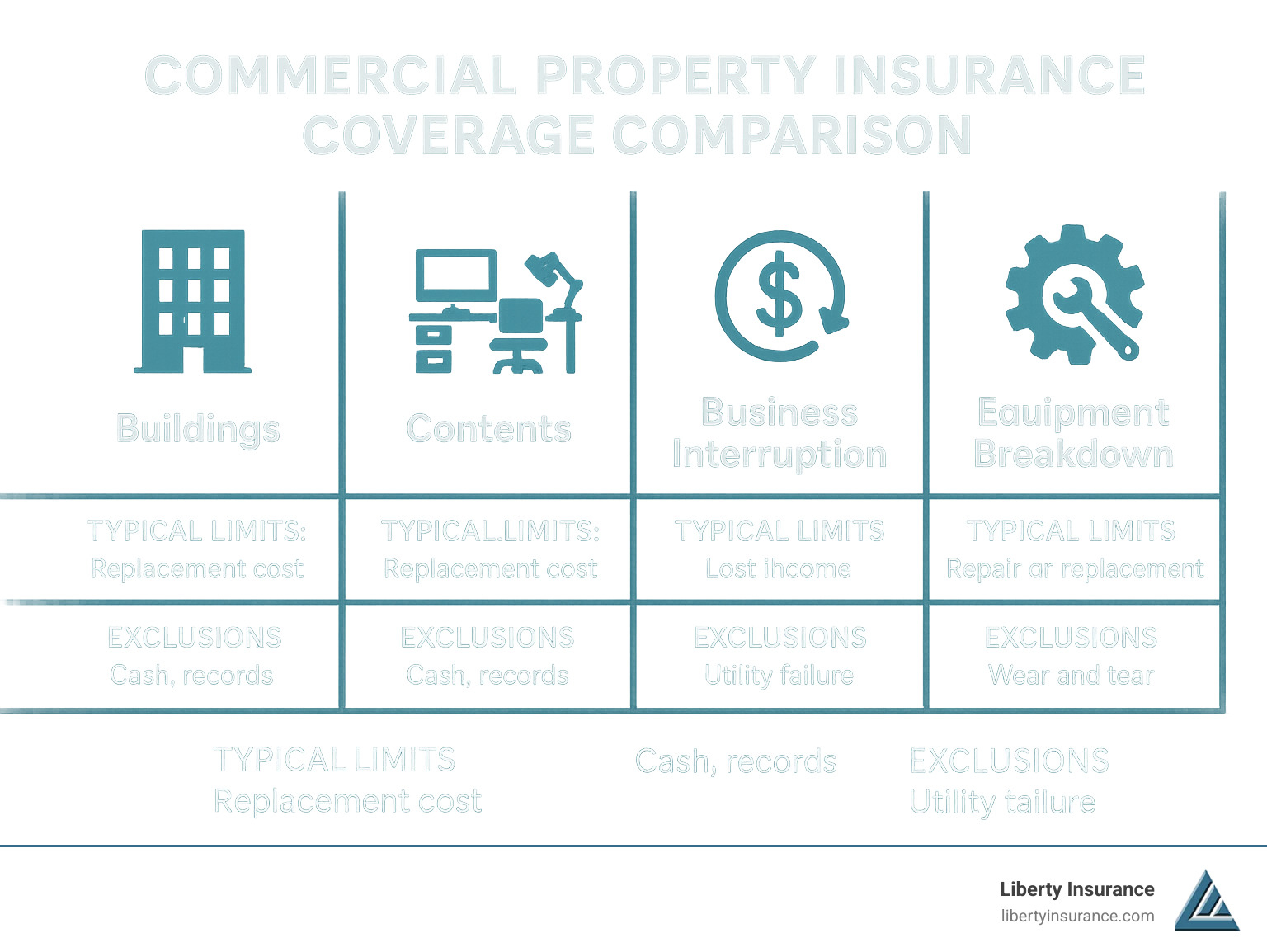
What happens if a fire destroys your office? Commercial Property Insurance has got your back. This policy covers damage to your business property, including the building and its contents. It’s essential for businesses with physical assets they can’t afford to lose.
Professional Liability Insurance
Ever make a mistake that cost a client money? Professional Liability Insurance, also known as Errors and Omissions Insurance, covers lawsuits over professional mistakes. If your business offers services, this is a must-have to protect against claims of negligence.
Here is the deal, these aren’t one-size-fits-all. Each has its own coverage, cost, and benefits. Let’s see how they stack up:
| Type | Coverage | Cost | Benefits |
|---|---|---|---|
| General Liability | Third-party bodily injury and property damage | $500-$1,000 annually | Protects against lawsuits and claims |
| Commercial Property | Building and contents damage | $750-$1,200 annually | Secures physical assets against loss |
| Professional Liability | Negligence and errors claims | $600-$1,800 annually | Safeguards against service-related lawsuits |
Pro Tip: Bundle these policies for a discount and comprehensive coverage.
Each type of insurance addresses a specific need. General Liability is ideal for customer-facing businesses, Commercial Property is crucial for those with physical locations, and Professional Liability is non-negotiable for service providers.
Benefits of Commercial Insurance for Small Businesses
Did you know that nearly 40% of small businesses never reopen after a disaster? Commercial insurance can be your financial lifeline. It’s crucial for safeguarding your livelihood.
Without insurance, a single unfortunate event could wipe out your business overnight. But with the right coverage, you mitigate risks and fortify your business against financial storms. Let’s dive into how commercial insurance can make a difference.
Financial Protection Against Unexpected Events
Imagine your business facing a lawsuit, a fire, or even a natural disaster. These events can be devastating. Commercial insurance steps in to cover costs that could otherwise drain your assets. Not convinced? Consider this: 52% of small businesses experienced an insurance event in the past five years.
Scenarios Where Commercial Insurance Can Save Your Business
Picture this: a customer slips and falls on your premises. You could be facing hefty medical bills and legal fees. With liability insurance, you’re covered. Or what if a key piece of equipment breaks down? Equipment breakdown insurance can help you repair or replace it swiftly, avoiding prolonged business interruptions.
Advantages of Adopting Commercial Insurance Across Business Sectors
Here is the deal: different industries face different risks. But they all benefit from having robust insurance coverage. Let’s break down the advantages:
- Retail: Protects against theft, property damage, and customer injuries.
- Construction: Covers worker injuries and equipment damages on-site.
- Food Service: Shields you from food spoilage, customer allergies, and kitchen accidents.
- Tech Startups: Offers cyber liability protection and coverage for intellectual property theft.
Avoid the financial pitfalls. Invest in commercial insurance to secure your business’s future.
Selecting the Right Insurance Provider
Did you know that over 40% of small businesses don’t have the right insurance coverage? That’s a risky gamble! Choosing the right insurance provider can make or break your business when disaster strikes.
Here is the deal: you need to look beyond the premiums. A flashy price tag might catch your eye, BUT the real value lies in the coverage and services they offer. Let’s dive into the key factors you should focus on.
Key Factors When Choosing an Insurance Provider
You need more than just cheap rates. Consider the reputation of the provider. Are they known for honoring claims swiftly? Check their financial stability—you don’t want them folding when you need them most. Evaluate their customer service reviews. A company with 24/7 support is invaluable when an incident occurs at midnight.
Pro Tip:
Look for providers offering tailored policies for small businesses; generic policies might not cover your specific needs.
Methods to Compare Insurance Providers
Start by listing out potential providers. Then, head over to comparison websites, but take those ratings with a grain of salt. Instead, create a comparison table for a clearer picture:
| Provider | Coverage Options | Claim Processing Time | Customer Reviews | Price |
|---|---|---|---|---|
| Provider A | Comprehensive | 48 Hours | 4.5/5 | $$$ |
| Provider B | Basic | 72 Hours | 4.0/5 | $$ |
Checklist for Evaluating Potential Insurance Providers
Before making a final decision, run through this checklist to ensure you’ve covered all bases:
- Verify the provider’s licensing in your state.
- Check for any complaints or legal actions against them.
- Request a sample policy to review the fine print.
- Ask about available discounts for bundling policies.
- Inquire about their process for filing and managing claims.
Ensuring you’re well-covered means doing your homework. With these steps, you’re on your way to making an informed choice that safeguards your business’s future.
The Impact of Insurance on Business Continuity
Did you know that 40% of businesses never reopen after a disaster? That’s a shocking stat. But with the right insurance, your business doesn’t have to be one of them.
Insurance isn’t just a safety net; it’s a lifeline during unexpected challenges. When a crisis hits, having proper insurance coverage can mean the difference between closing your doors or bouncing back stronger than ever.
Ensuring Business Continuity During Crises
Here is the deal: business continuity hinges on preparedness. When disaster strikes, having comprehensive insurance can keep your operations running smoothly. Whether it’s a natural disaster, theft, or an unexpected lawsuit, your insurance policy can cover the financial gaps, allowing you to focus on getting back on your feet.
Step #1: Review your insurance coverage regularly to ensure it matches your current business needs. Step #2: Establish a relationship with your insurer. Understanding your policy details can save you time and stress when filing a claim.
The Process of Filing an Insurance Claim
Filing an insurance claim during a crisis can be daunting. BUT, it doesn’t have to be. First, document everything. Take photos, gather receipts, and get a police report if necessary. Then, contact your insurer as soon as possible to start the claims process.
Pro Tip:
Keep a digital copy of all your important documents. Accessing them quickly can expedite your claim process.
Once your claim is filed, follow up regularly to ensure it’s being processed promptly. Remember, your insurer is your partner in getting your business back on track.
Success Stories: Bouncing Back with Effective Insurance Coverage
Let’s look at businesses that thrived after crises. One restaurant, devastated by a fire, managed to reopen in just six months, thanks to their business interruption insurance. This coverage compensated for lost income during the rebuild.
Another example is a retail store that rebounded from a major flood. Their comprehensive policy covered both property damage and stock replacement, allowing them to resume operations with minimal delay.
These stories aren’t just luck. They’re a testament to the transformative power of having the right insurance at the right time.
Last Word
In the grand scheme of business strategy, insurance might not feel like the most thrilling aspect, but it’s undeniably crucial. By securing the right coverage, you’re not just protecting your assets; you’re ensuring your business’s longevity and stability. Remember, it’s better to have insurance and not need it than to need it and not have it. Here’s to a safer, more secure business future!
Frequently Asked Questions
What are the three essential types of small business insurance?
The three essential types are General Liability Insurance, Professional Liability Insurance, and Commercial Property Insurance.
Why is General Liability Insurance important for small businesses?
General Liability Insurance protects your business from claims related to bodily injury, property damage, and advertising injury, making it a fundamental coverage for any business.
How does Professional Liability Insurance benefit a service-based business?
This insurance covers claims of negligence, errors, or omissions in the services you provide, crucial for businesses where expertise and advice are offered.
What does Commercial Property Insurance cover?
Commercial Property Insurance covers damage to your business’s physical assets, such as buildings and equipment, from risks like fire, theft, and natural disasters.
How can I choose the right insurance provider for my small business?
Consider factors like the provider’s reputation, financial stability, coverage options, and customer service. Comparing multiple quotes is also advisable.
Leave a Reply